Three Salvadoran soldiers killed in Haiti while handling explosives
One other was injured in the explosion, which caused the first deaths among troops deployed to Haiti since late October.
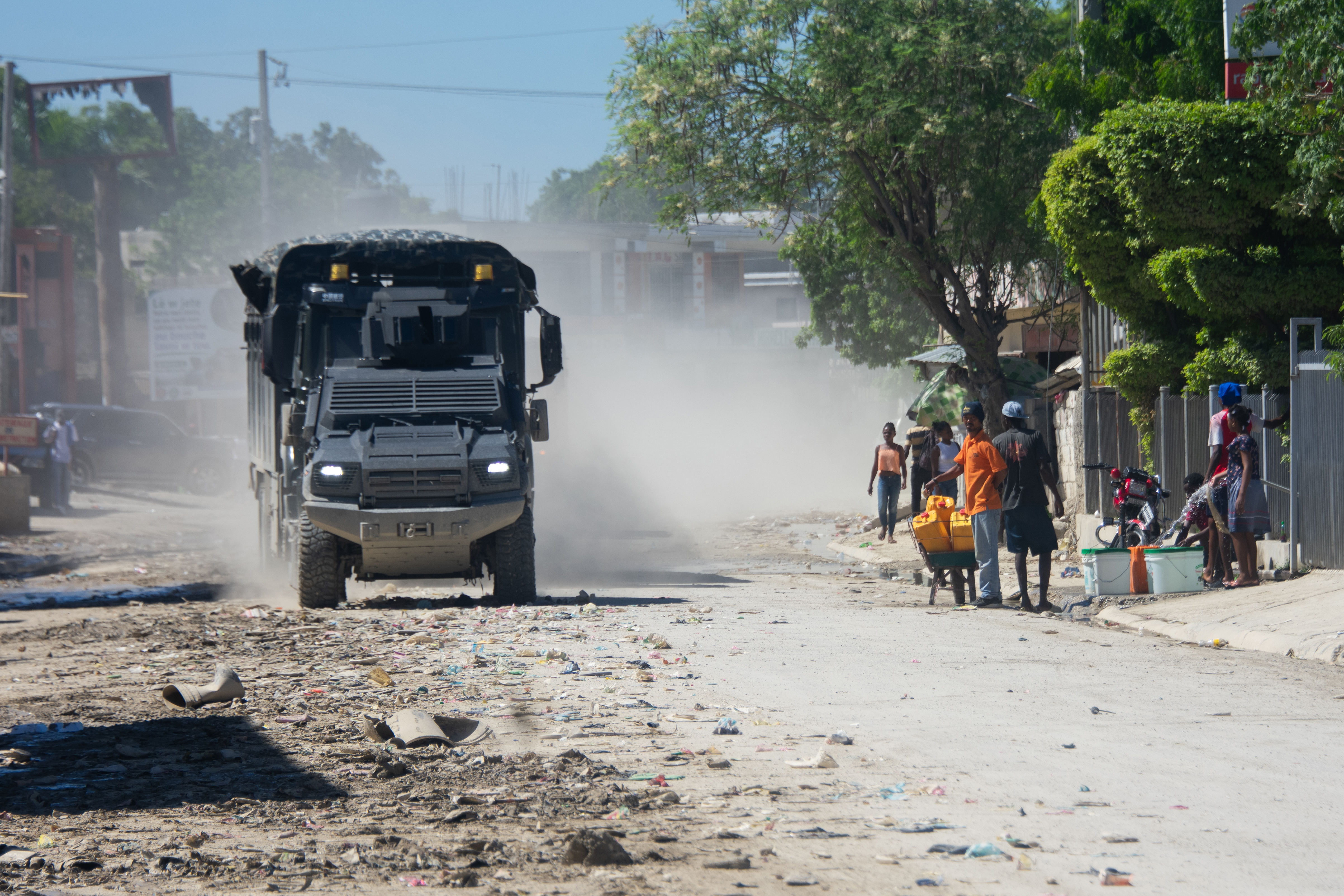
Three Salvadoran soldiers have been killed in Haiti while handling explosive material, El Salvador’s army said, marking the first deaths among the roughly 2,500 troops who have been deployed to the country since late October.
A fourth soldier injured in the incident was “no longer in danger” after being airlifted for treatment in the neighbouring Dominican Republic, the army said in a post on X on Saturday. It did not reveal the identities of the soldiers.
The deaths come just over a month after El Salvador’s President Nayib Bukele sent troops into Haiti, announcing a rescue mission to find four aviation technicians who went missing on October 18 after an attack on their vehicle near the capital, Port-au-Prince.
They were working with the United Nations-backed Gang Suppression Force (GSF) at the time.
The rescue mission has since broadened into an offensive against Haiti’s gangs, with Salvadoran soldiers working alongside Haitian and international forces.
Salvadoran officials have said they plan to leave once the four missing technicians are found.
Wilson Joseph, leader of the 400 Mawozo gang, told The Associated Press news agency earlier this month that the men were dead, although he provided no evidence. El Salvador’s government maintains they are alive.
Support for Salvadoran troops
The Haitian government has suggested it wants the deployment to be extended, and some Haitians took to the streets in the country and elsewhere earlier this week in large rallies to express support for the troops and Bukele.
The terms of the bilateral agreement between Haiti and El Salvador have not been revealed publicly, but according to the UN, most Salvadoran soldiers are operating outside the GSF and do not fall under the UN’s reporting mechanism for the mission.
Bukele has been promoting the intervention in Haiti on social media, posting videos of strikes on homes belonging to gang leaders. Haitian officials announced earlier this week that they retook control of the national football stadium.
Analysts, however, have questioned how much the Salvadoran deployment has contributed to recent gains and whether they would last.
They have also raised concerns about the risk to civilians, citing a lack of transparency around the rules of engagement and how Salvadoran troops are monitored.
Prison agreement
Earlier, on Friday, Haiti announced another agreement with El Salvador for the construction of new prisons, following Haitian Minister of Justice and Public Security Patrick Pelissier’s official visit to El Salvador.
Haiti has struggled to find proper infrastructure to hold those arrested after powerful gangs raided the country’s two biggest prisons in 2024 and released thousands of inmates.
The first prison will be launched soon, with two more to follow, all built by a Salvadoran company in collaboration with a Haitian firm, the minister said.
Pelissier also praised the notorious Salvadoran maximum security prison, CECOT, which he visited on his trip to the country.
“Once you enter, there is no hope of ever seeing the outside world again,” he said.
El Salvador, which enacted a state of exception in 2022 following a surge in gang violence, has imprisoned more than 90,000 people with no access to family visits.
The United States has deported Salvadorans and Venezuelans to CECOT, some of whom have alleged being tortured there after release.
