Fossil fuel impasse pushes COP31 climate talks into second day of overtime
COP31 President Murat Kurum asks negotiators to consider a last-minute proposal in attempt to reach an agreement.
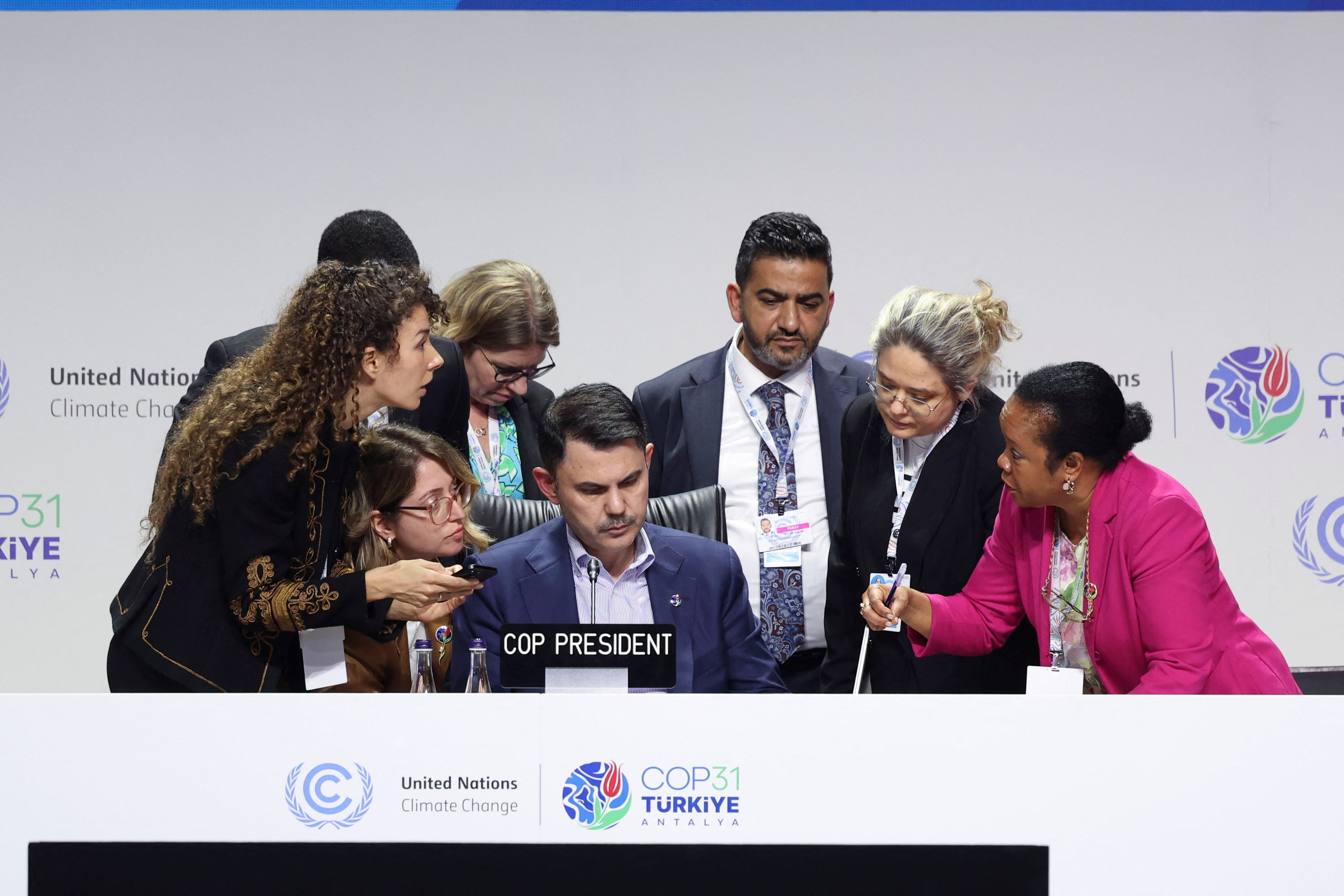
Turkish officials have asked negotiators at the COP31 climate summit to consider a last-minute proposal as talks stretched into a second day of overtime over the fossil fuels issue.
“We believe that we have put forward a text which all the parties can agree upon,” COP31 President Murat Kurum told a late-night plenary session on Saturday.
Recommended Stories
list of 3 items- list 1 of 3Fossil fuel talks deadlock pushes COP31 climate summit into overtime
- list 2 of 3COP31 deal stalls as nations struggle to agree on climate plan
- list 3 of 3Gen Z protests sweep Europe over wars, rising costs and climate
Kurum, who is also Turkiye’s environment minister, said the conference would reconvene later on Sunday morning to approve the deal.
The latest text was not immediately made public, and it was unclear if negotiators had received the wording overnight, which would give nations only a few hours to submit objections and changes.
An earlier draft had drawn strong condemnation for failing to mention fossil fuels, the largest contributors to climate change.
Kurum said he believed concerns around fossil fuels had been addressed, as had those around helping developing countries finance their adaptations to climate change.
The new text followed intensive consultations between Australia, which is leading the talks; Turkiye, which is hosting the meeting; and nearly 200 delegations from many of the world’s richest, poorest, largest and smallest nations.
Delegations had until 03:00 GMT on Sunday to raise any objections to the deal, with a session scheduled at 06:00 GMT to begin approving it.
The summit’s agreement is meant to address how the world will deal with climate change, which drives heatwaves, floods and other disasters.
An opening draft from Australia on Monday called for a faster phase-out of fossil fuels. A slimmer version on Thursday removed every mention of them after Saudi Arabia and other major oil and gas producers objected.
Key issues that slowed down the agreement included how much effort countries should make to wean themselves off fossil fuels, such as coal, oil and gas.
Other issues included whether to encourage industrial carbon capture and storage of pollutants, as well as whether ramping up electricity should only be done with renewables, such as wind and solar, or also involve other sources like natural gas and coal.
To avert the most catastrophic effects of warming, experts said the world needs to urgently and drastically cut fossil fuel emissions.
The two-week talks in the Turkish city of Antalya were due to end on Friday.
In a letter sent on Saturday to this year’s cohosts, Turkiye and Australia, 100 civil society groups warned that they were “on course to preside over one of the most disappointing COPs” the UN has ever held.
The letter stated there were only hours left “to save this COP from becoming a low point of three decades of climate negotiations”.
In the lead-up to these talks, the United Nations said the world would likely blow past the 2015 Paris Agreement goal of limiting warming to 1.5 degrees Celsius (2.7 degrees Fahrenheit) above pre-industrial temperatures.
