Australian ISIL relatives sent back to Syria’s Roj camp after release
Thirty-four people returned due to a coordination problem with Damascus that is expected to be resolved late on Monday, officials say.
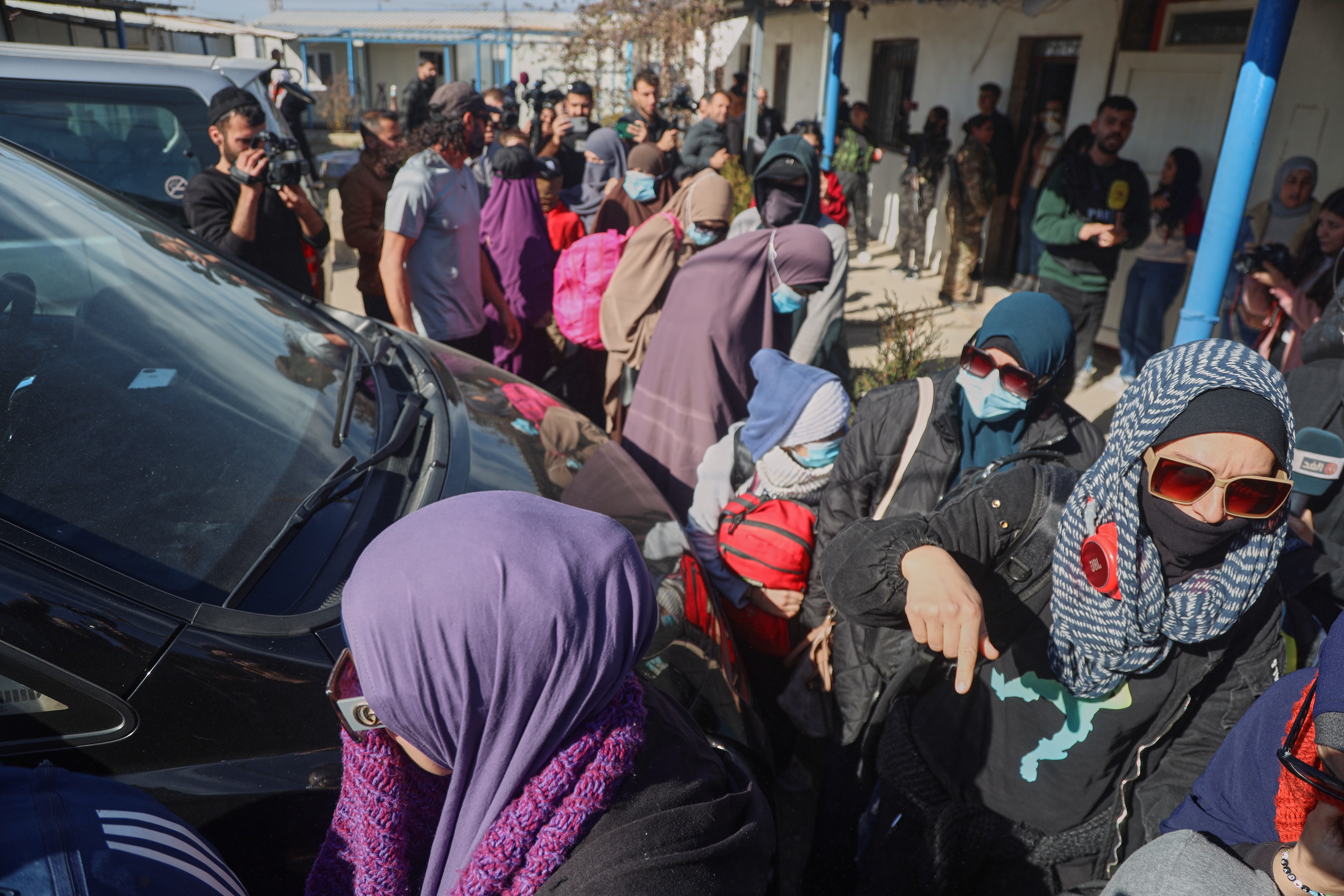
Thirty-four Australian relatives of ISIL (ISIS) fighters have been brought back to a camp where they were being held just hours after their release, returned due to “technical problems” with their transfer, according to local sources cited by Reuters and AFP news agencies.
Hukmiya Ibrahim, a director of the Roj camp, said on Monday that the Australian citizens had been handed over to members of their families who had come to Syria for the release, and then sent on buses towards Damascus, where they were due to depart for Australia.
Recommended Stories
list of 3 items- list 1 of 3Syrian government takes over prison with ISIL-linked detainees in Raqqa
- list 2 of 3What will it take for Syrians to return to Aleppo after years of war?
- list 3 of 3French ISIL suspects transferred from Syria allege torture in Iraqi prisons
However, the Australian families were forced to turn back shortly after leaving due to “poor coordination between their relatives and the Damascus government”, said camp official Rashid Omar.
Reuters cited a Syrian official as saying the issue was “purely procedural” and expected to be resolved later on Monday.
Ibrahim said those slated for release from the camp on Monday “are the last Australians in the Roj camp”, where 2,201 people with about 50 nationalities still reside.

Thousands of people believed to be linked to ISIL have been held at Roj and a second camp, al-Hol, since the armed group was driven from its final territorial foothold in Syria in 2019.
Syrian government forces took control of al-Hol last month during fighting with the Kurdish-led Syrian Democratic Forces (SDF), which led to state forces seizing most of the territory in northeastern Syria previously controlled by Kurdish-led forces.
‘Safety of Australians overriding priority’
The Australian government said in a statement that it will not repatriate people from Syria.
“Our security agencies have been monitoring – and continue to monitor – the situation in Syria to ensure they are prepared for any Australians seeking to return to Australia.
“People in this cohort need to know that if they have committed a crime and if they return to Australia, they will be met with the full force of the law.
“The safety of Australians and the protection of Australia’s national interests remain the overriding priority.”
The British NGO Save The Children warned in January that 20,000 children in camps in northeastern Syria faced being “harmed, exploited or coerced by armed actors” as the security situation in the region declines and called on countries to repatriate their civilians from the camps.
Governments around the world, including the United Kingdom, have been slow to bring back their citizens. The most well-known resident of the Roj camp, UK-born Shamima Begum, was 15 when she and two other girls fled from London in 2015 to marry ISIL fighters in Syria.
In 2019, the UK government revoked Begum’s citizenship soon after she was discovered in a detention camp in Syria.
Since then, she has challenged the decision, which was turned down by an appeals court in February 2024. Born in the UK to Bangladeshi parents, Begum does not hold Bangladeshi citizenship. She is still in the Roj camp.
