Tarique Rahman sworn in as new Bangladesh prime minister
Rahman takes office as other lawmakers are sworn in to parliament days after the BNP’s landslide election victory.
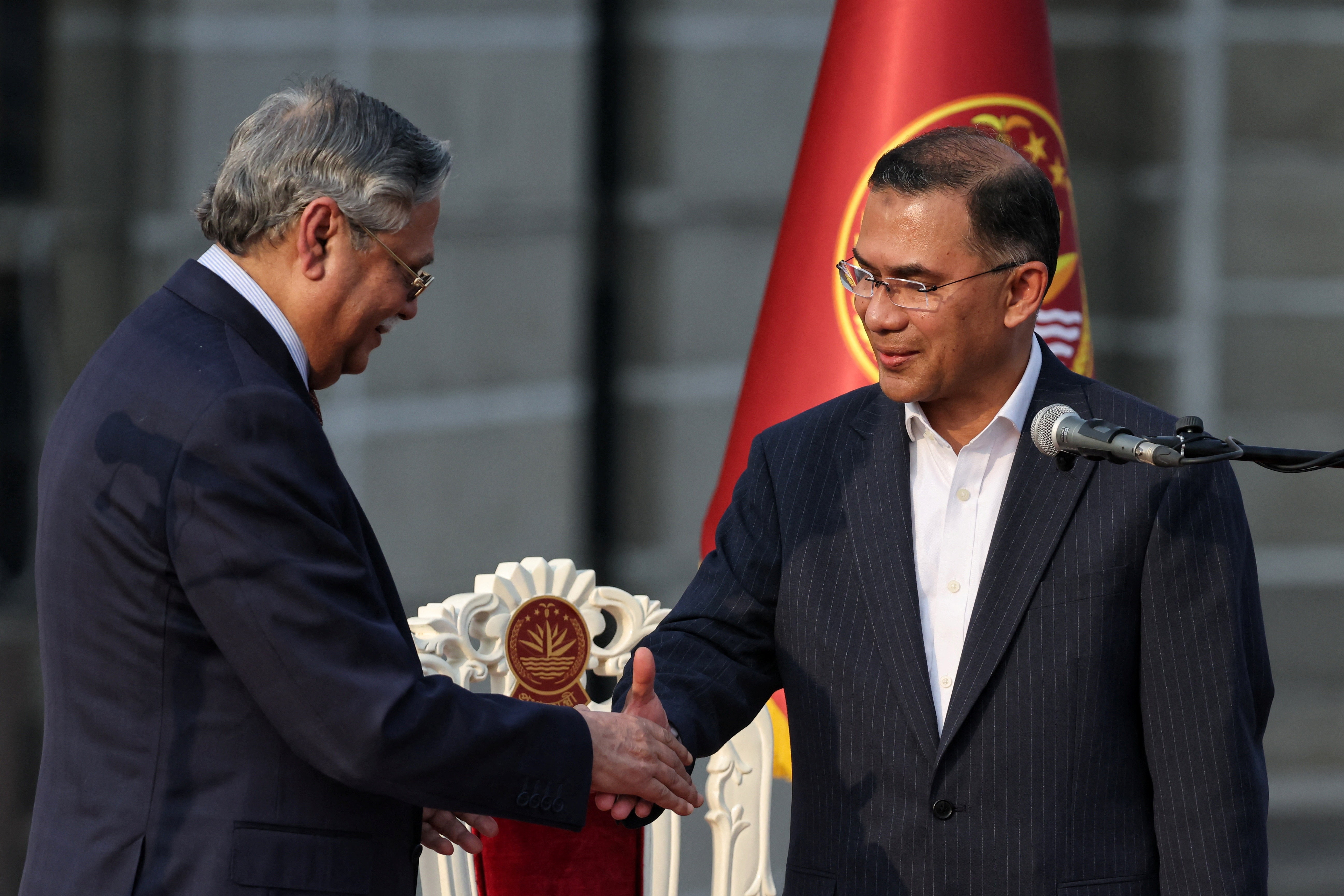

Tarique Rahman has been sworn in as Bangladesh’s new prime minister, days after his party swept the first vote since the 2024 student-led uprising that expelled the then-leader, Sheikh Hasina.
“I will faithfully discharge the duties of the office of prime minister of the government in accordance with the law,” he said on Tuesday, sworn in by President Mohammed Shahabuddin, in a televised ceremony held outside the parliament building in the capital, Dhaka.
Recommended Stories
list of 3 items- list 1 of 3‘Bangladesh will be better’: BNP victory puts nation at crossroads
- list 2 of 3Tarique Rahman: From 17-year exile to landslide win in Bangladesh election
- list 3 of 3‘Very hopeful’: Cautious optimism among Gen Z Bangladeshis after key vote
The Bangladesh Nationalist Party (BNP) secured more than a two-thirds majority in last week’s elections.
Earlier, inside the parliament’s oath room, lawmakers pledged loyalty to Bangladesh as they were sworn in by Chief Election Commissioner AMM Nasir Uddin.
Foreign dignitaries, including the Pakistani foreign minister and the speaker of the Indian Parliament, were in attendance.
Cabinet members were also slated to be sworn in on Tuesday.
Despite tight security, hundreds of people gathered outside the grounds throughout the day, awaiting the proceedings.
“People really want changes. They want to see new faces in parliament. People with good qualifications, even those who are young,” said Al Jazeera’s Tanvir Chowdhury, reporting from Dhaka.
“You’ll see a lot of new faces, and that’s what’s expected: They want new dynamics in parliament.”
The BNP and its allies won at least 212 seats. Elections were held in 299 constituencies in the 350-seat parliament, giving it a strong majority, while the Jamaat-e-Islami and its allies won 77 seats. Hasina’s Awami League was banned from participating.
Rahman is taking over from an interim government that led the country for 18 months after Hasina’s ousting.
He will also be tasked with implementing the July National Charter, which contains 80-plus prospective reforms of Bangladesh’s governance system.
More than 60 percent of the electorate voted to pass the charter in a referendum held with the general elections.
The sweeping document introduces term limits, a two-chamber parliament and limits the governing party’s ability to make unilateral amendments, among other changes.
“Lots of fundamental and primary change is expected by the population, particularly the younger population who were behind the July uprising,” Al Jazeera’s Chowdhury said. “They want to be represented in this parliament, and their voices must be heard.”
