US immigration judge rejects Trump bid to deport Columbia student Mahdawi
Mahdawi, a Palestinian student activist, faced deportation proceedings amid a protest crackdown under the Trump administration.
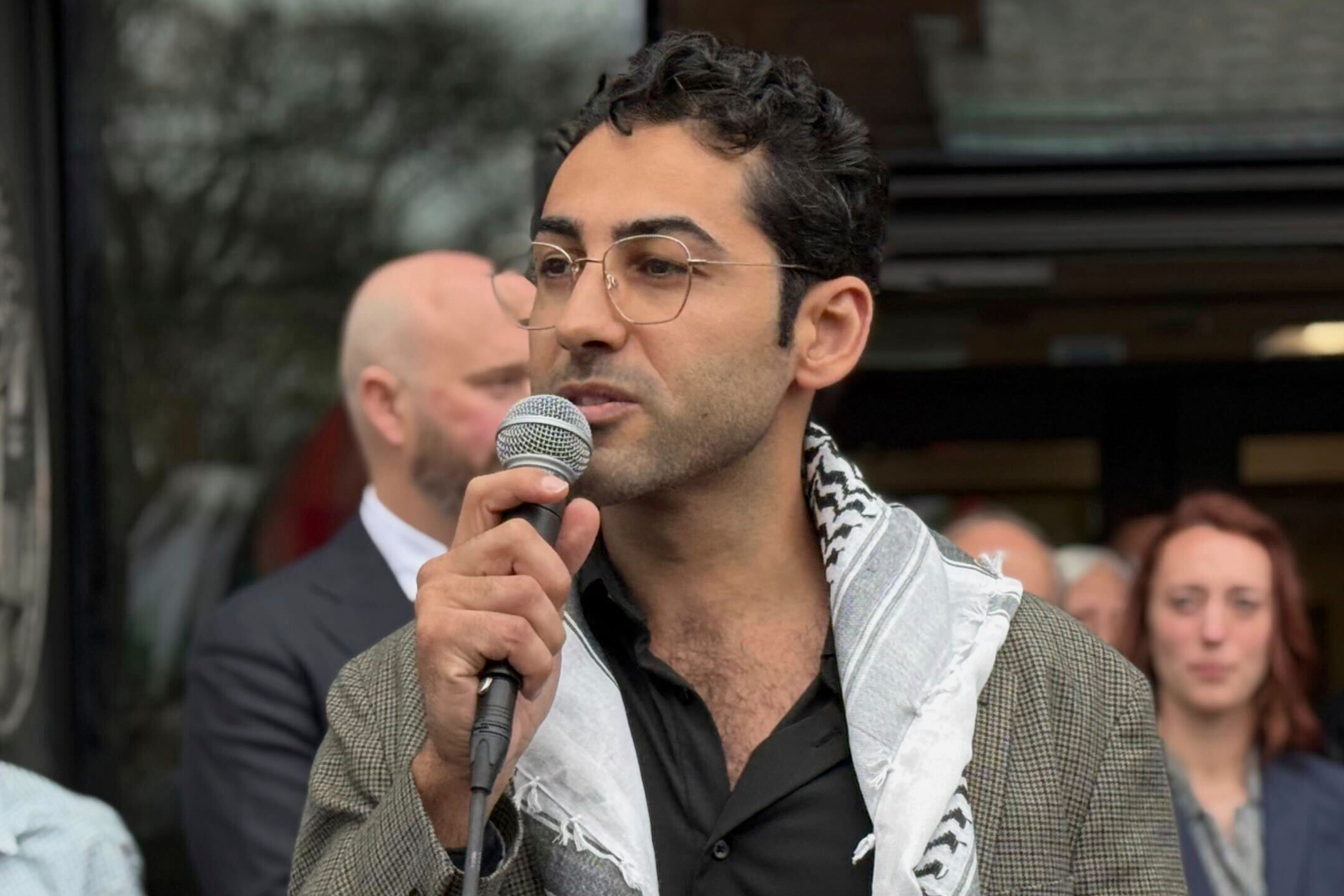
An immigration judge in the United States has ruled against an attempt under President Donald Trump to deport Mohsen Mahdawi, a Columbia University student arrested last year for his protests against Israel’s genocide in Gaza.
The decision, issued on February 13, became public as part of court filings on Tuesday from Mahdawi’s lawyers.
Recommended Stories
list of 3 items- list 1 of 3Yemeni Americans feel ‘betrayed’ as Trump revokes immigration protections
- list 2 of 3US and Iran reach ‘guiding principles’ in Geneva nuclear talks
- list 3 of 3Colombia to resume peace talks with ECG after temporary suspension
The filing was submitted to a federal appeals court in New York, which has been considering a challenge from the Trump administration against Mahdawi’s release from custody.
In a public statement released through the American Civil Liberties Union (ACLU), Mahdawi thanked the immigration court for its decision, which he framed as a strike in favour of free-speech rights.
“I am grateful to the court for honoring the rule of law and holding the line against the government’s attempts to trample on due process,” Mahdawi said. “This decision is an important step towards upholding what fear tried to destroy: the right to speak for peace and justice.”
But the ACLU indicated that the immigration court’s decision was made “without prejudice”, a legal term that means the Trump administration could refile its case against Mahdawi.
Raised in a Palestinian refugee camp in the occupied West Bank, Mahdawi is a lawful permanent resident who has lived in Vermont for 10 years.
He enrolled at Columbia, a prestigious Ivy League university, to study philosophy. But he was also a visible member of the campus’s activist community, founding a Palestinian student society alongside fellow student Mahmoud Khalil.
Columbia became a hub for pro-Palestinian protests in 2024, and Trump campaigned for re-election, in part, on cracking down on the demonstrations.
Khalil became the first student protester to be detained by Immigration and Customs Enforcement (ICE) in March of last year, less than three months into Trump’s second term.
Then, on April 14, Mahdawi was arrested at a meeting set up by the government, allegedly to process his citizenship application.
ICE detained him in “direct retaliation for his advocacy of Palestinian rights”, the ACLU said in a statement at the time.
The Trump administration attempted to transfer Mahdawi out of state to Louisiana, but a court order ultimately blocked it from doing so.
Mahdawi was ultimately released on April 30, after US Judge Geoffrey Crawford accused the Trump administration of doing “great harm” to someone who had committed no crime.
Human rights advocates have described the Trump administration’s attempts to deport foreign-born student activists as a campaign to chill free speech.
After his release last year, Mahdawi walked out of the court with both hands in the air, flashing peace signs as supporters greeted him with cheers.
As he spoke, he shared a message for Trump. “I am not afraid of you,” Mahdawi said to Trump.
He also addressed the people of Palestine and sought to dispel perceptions that the student protest movement was anything but peaceful.
“We are pro-peace and antiwar,” Mahdawi explained. “To my people in Palestine: I feel your pain, I see your suffering, and I see freedom, and it is very soon.”
Mahdawi’s arrest comes as part of a wider push by the Trump administration to target visa holders and permanent residents for their pro-Palestine advocacy.
Trump has also pressured top universities to crack down on pro-Palestine protests in the name of combating anti-Semitism. In some cases, the Trump administration has opened investigations into campuses where pro-Palestinian protests were prominent, accusing them of civil rights violations.
Last July, Columbia University entered into a $200m settlement with the Trump administration, with a further $21m given to end a probe into allegations of religious-based harassment.
The university, however, did not admit to wrongdoing.
