Cuba pardons more than 2,000 prisoners amid US pressure
Releasing political prisoners has long been a core demand of the US, which is implementing a strict oil blockade on Cuba.
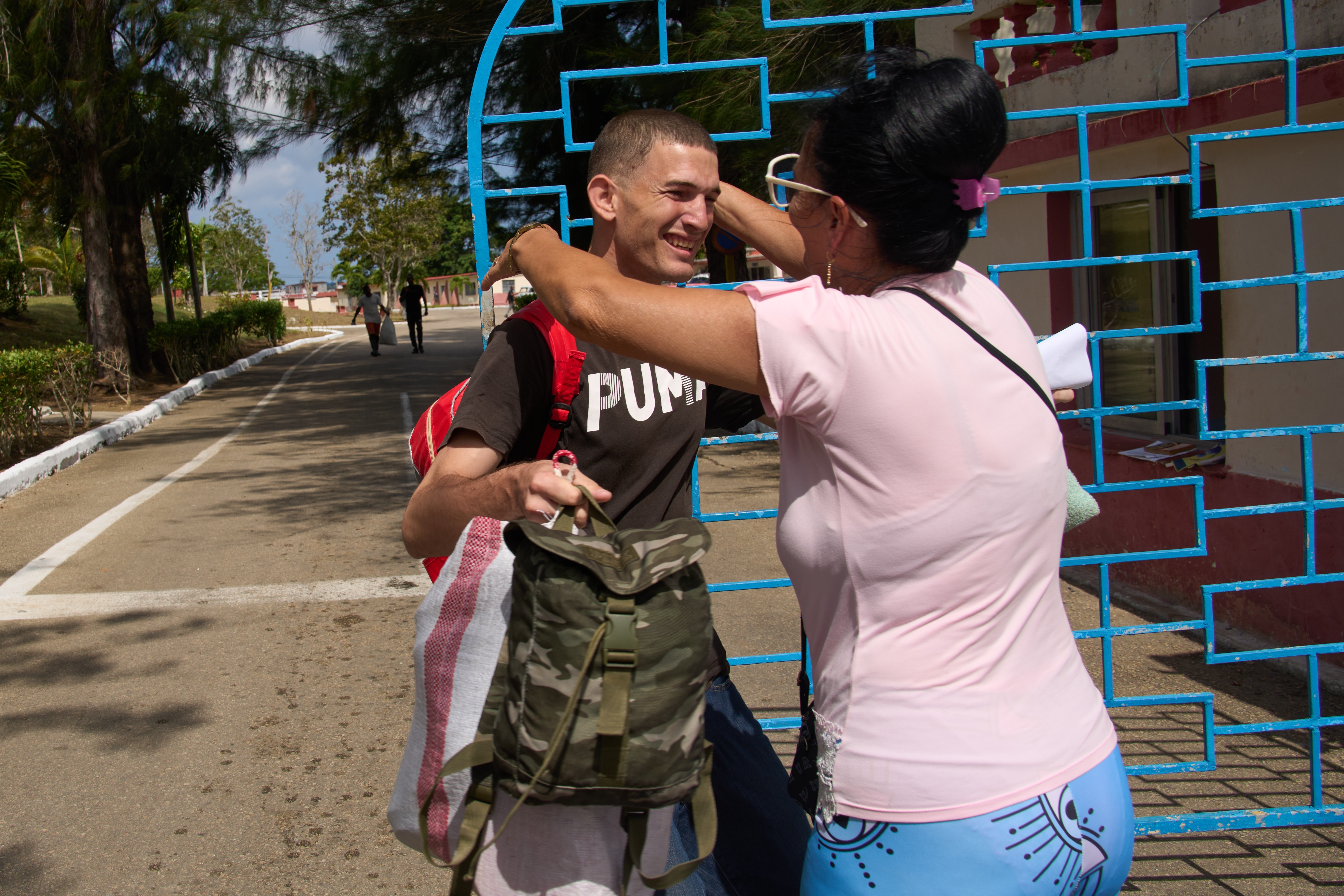
Cuba’s government says it has pardoned 2,010 prisoners as a “humanitarian” gesture.
The release during the Easter Holy Week follows pledges made in March to free prisoners as the United States increases pressure on Cuba’s leadership.
Recommended Stories
list of 3 items- list 1 of 3Cuba crisis explained: Who holds power, and could Diaz-Canel be replaced?
- list 2 of 3‘I need to leave’: Cuba’s tourism workers reel from US oil blockade
- list 3 of 3Russia sending second ship with oil to Cuba amid US blockade
Thursday’s announcement, first reported by state media, is the second prisoner release this year during talks with the administration of US President Donald Trump. It is also one of the largest such releases in nearly a decade.
The decision “stemmed from a careful analysis of the crimes committed by those convicted, their good conduct in prison, the fact that they had served a significant portion of their sentence and their state of health”, Cuba’s state-run Granma newspaper said.
The Trump administration, however, has indicated it would be scrutinising the release closely for evidence that political prisoners were among the freed.
“It is unclear how many, if any, political prisoners will be released,” a Trump spokesperson told the news agency Reuters. “We continue to call for the immediate release of the hundreds of other brave Cuban patriots who remain unjustly detained.”
The Cuban government has consistently rejected any suggestion that it makes decisions under US pressure. It has also denied holding political prisoners.
But the timing of Friday’s announcement coincides with the most intense pressure campaign applied by Washington in decades.
Since January, the Trump administration has largely blocked the import of oil to Cuba, first by severing trade with Venezuela and later by threatening tariffs against its trading partners.
The result has been an energy crisis that has caused flights to be suspended, public transportation to be halted, and essential services to come to a standstill, including hospital care. Two island-wide blackouts have gripped the island in the last month alone.
The Trump administration has called for a change of government in communist-run Cuba, and the US president has openly mused about “taking” the island.
But the two sides have held talks recently, in an apparent effort to stave off a growing humanitarian crisis on the island. Experts said the size of Friday’s prisoner release could be a positive sign.
“It seems not far-fetched to think that this is a sign that some of the conversation between both governments is advancing. Perhaps slowly, but advancing. To where? Unclear,” Michael Bustamante, chair of Cuban studies at the University of Miami, told the AFP news agency.
“I think we will also have to see who is included in these releases to have a sense of their potential political significance,” he said.
‘Long live freedom’
Releasing political prisoners has long been a core US demand in Cuba.
The Cuban government did not identify those who were pardoned nor say what crimes they had committed.
It did indicate that the individuals being freed included young people, women and prisoners over 60 years old who were scheduled for early release within the next six months to a year.
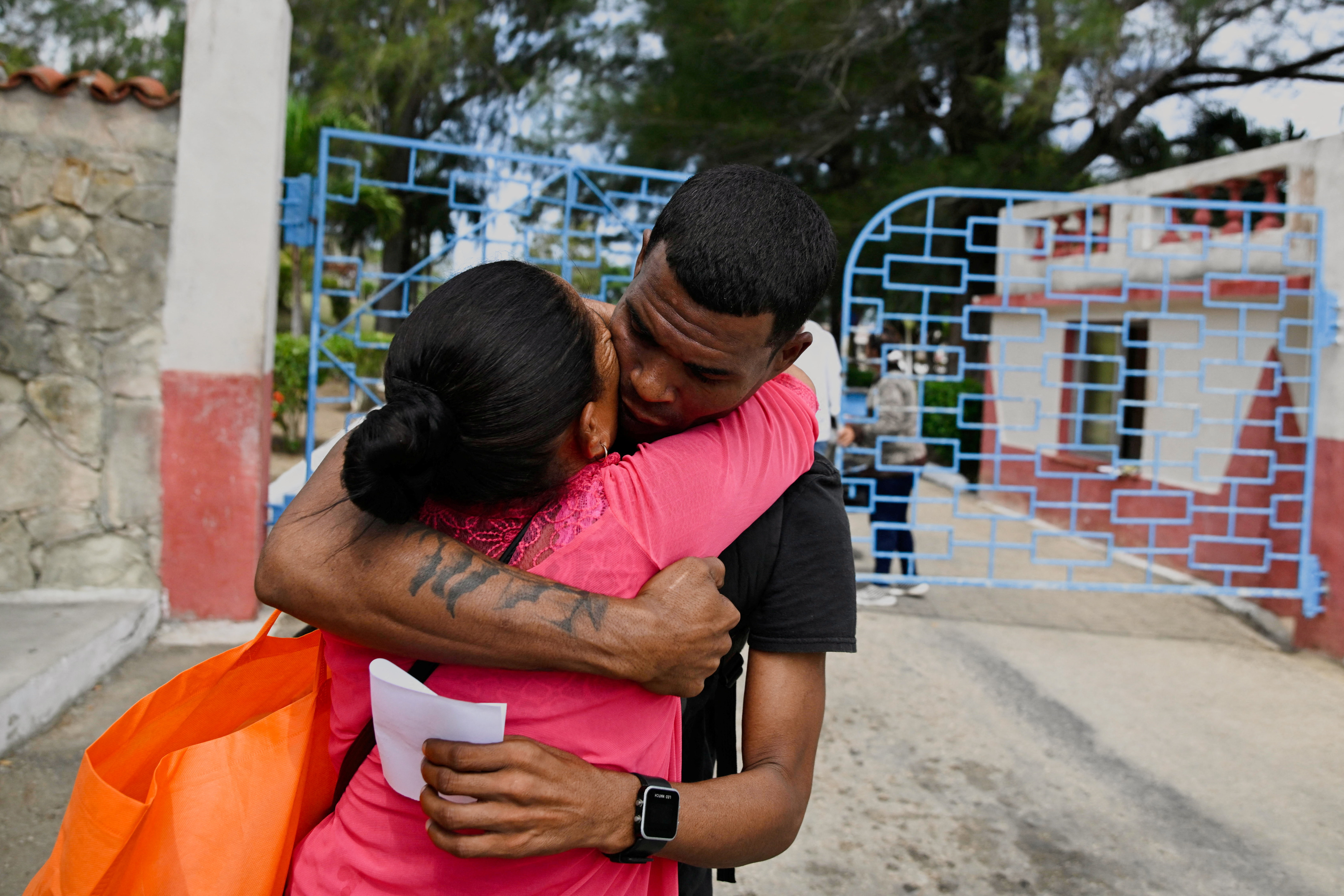
Prisoners were seen exiting the La Lima prison outside of Havana on Friday, where some were met by family and friends. Some carried slips of paper noting they had received a “pardon” by the state.
Abel Tamayo, who was imprisoned for bribery in 2024, was among the freed. He told Reuters that the prisoner release was a promising gesture from the Cuban government.
“This shows they are open to everything: open to dialogue, open to national unity,” Tamayo told Reuters. “There are many people who are imprisoned who may well be bad people, but there are also many who are good people.”
Katia Arias, meanwhile, was among the family members waiting to collect their loved ones. Her 20-year-old son Emilio Alejandro Leyva had been imprisoned for robbery.
“It has been so difficult, but today God has given me so much joy,” Arias, 43, told The Associated Press as she cried and embraced her son.
“Today, I feel so happy. This is how all mothers who will have their children released today should feel.”
One released prisoner was heard to yell, “Long live freedom,” as he embraced his sister.
Still, human rights organisations and opposition groups noted that the timing of the release and the lack of details was strategic on the part of the Cuban government.
“The government presents it as a humanitarian gesture toward prisoners, not as the release of political prisoners,” said Manuel Cuesta Morúa, leader of the Council for Democratic Transition in Cuba, the island’s main opposition platform.
“By doing so, it mixes things up to avoid giving the impression that it recognises political imprisonment in Cuba.”
The advocacy organisation Prisoners Defended has estimated that Cuba has 1,214 political prisoners as of February. The island has long been accused of repressing dissent.
‘Good will’
Friday’s release is the second in less than a month.
On March 12, the government also announced that it would free 51 prisoners as a sign of “good will” toward the Vatican, which has often acted as a mediator between Washington and Havana.
The following day, President Miguel Diaz-Canel confirmed talks between US and Cuban officials.
The Cuban presidency noted on Thursday that this week’s release marked the fifth prisoner pardon since 2011, for a total of more than 11,000 people freed.
It said the decision was “taking place within the context of the religious observances of Holy Week – a customary practice within our criminal justice system and a reflection of the humanitarian legacy of the Revolution”.
Foreigners and Cuban citizens residing abroad are among those being pardoned, the Cuban government said. The released did not include anyone convicted of murder, sex assault, drug-related crimes, theft, illegal slaughter of livestock and crimes against authority.
The pardons come as Russia announced on Thursday it would send a second oil tanker to Cuba. This week, Trump eased his de facto oil blockade on the island to allow entry of a first shipment from Russia.
“One is tempted to draw the conclusion or wonder if the Trump administration’s decision to let in a Russian ship … and maybe another one, may or may not be related here,” Bustamante said.
US Secretary of State Marco Rubio, a Cuban American and vociferous critic of Havana’s government, told Fox News on Tuesday that Cuba needs economic and political reforms.
“You cannot fix their economy if you don’t change their system of government,” Rubio said. “But they’re in a lot of trouble, there’s no doubt about it, and we’ll have more news on that fairly soon.”
