Mapping the latest US strikes across Iran
US attacks kill dozens as retaliating Iranian forces target regional bases, pushing a fragile ceasefire closer to collapse.
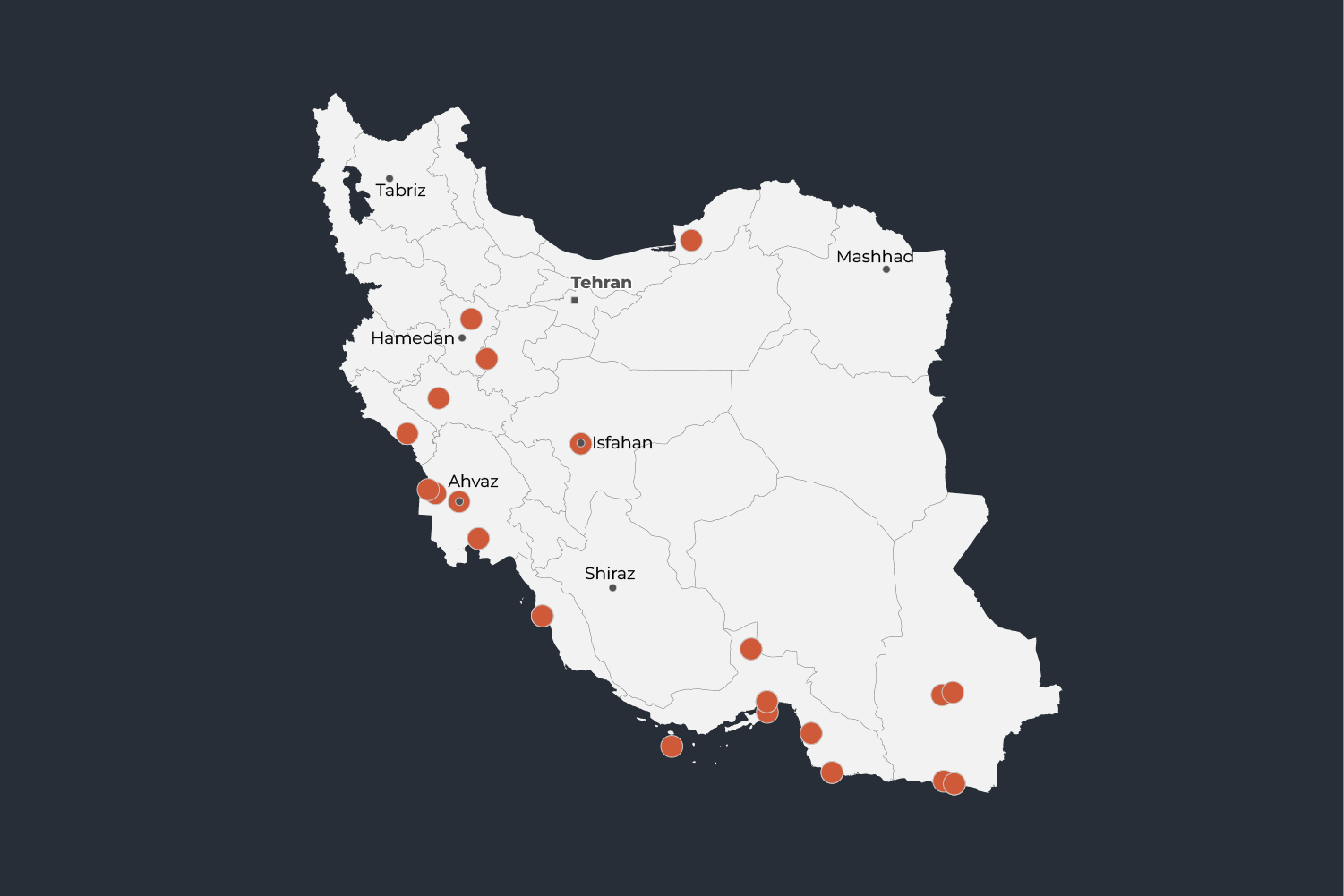


The United States military has launched more than 100 air attacks across Iran since July 8, killing at least 50 people and wounding more than 500, according to Iranian officials.
The US, which has reimposed a naval blockade on Iran, said it targeted military sites along the country’s southern coast and near the Strait of Hormuz, despite a ceasefire agreement.
Recommended Stories
list of 4 items- list 1 of 4Why has Lindsey Graham’s sister inherited his Senate seat after his death?
- list 2 of 4Will Lindsey Graham’s death affect Israel’s standing in Washington?
- list 3 of 4As the US restarts war on Iran, is its weapons stockpile running low?
- list 4 of 4US strikes marine control tower in Iran
According to the Armed Conflict Location and Event Data (ACLED), the US has attacked Iran at least 120 times since July 8. Initially aimed at Iran’s southern coast, the strikes in recent days have escalated to include key civilian infrastructure and military facilities across the country.
Iran has also carried out retaliatory attacks across the region, targeting not just US bases, but also power and desalination plants in drone and missile attacks, raising fears of a return to an all-out war.
The US military says 17 service members have been killed since the war began in late February and nearly 100 others injured.
Where has the US struck Iran, and where has Iran counterattacked?
Iranian media have reported explosions in several cities and on islands along the country’s southern coast and mainland since the war resumed.
They include Aqqala, Ahvaz, Bampur, Bandar Abbas, Bushehr, Chabahar, Chabahar port, Dasht-e Azadegan, Dehloran, Farvar, Hajiabad, Hoveyzeh, Iranshahr airport, Isfahan, Jask, Kabudarahang, Khondab, Konark, Bandar-e Mahshahr, Qeshm, Sirik and Vesiyan.
According to ACLED, US strikes occurred in May and June as well, targeting Bandar Abbas, Bandar-e Lengeh, Kong, Qeshm Island and the Shahid Raahbar naval base.
Iran’s southern waters are home to more than 30 islands, several of which lie along the Strait of Hormuz and form a defensive arc.
These islands give Iran forward positions to monitor shipping and deploy missiles, drones and naval forces. They also protect key oil and gas infrastructure along one of the world’s busiest energy corridors.
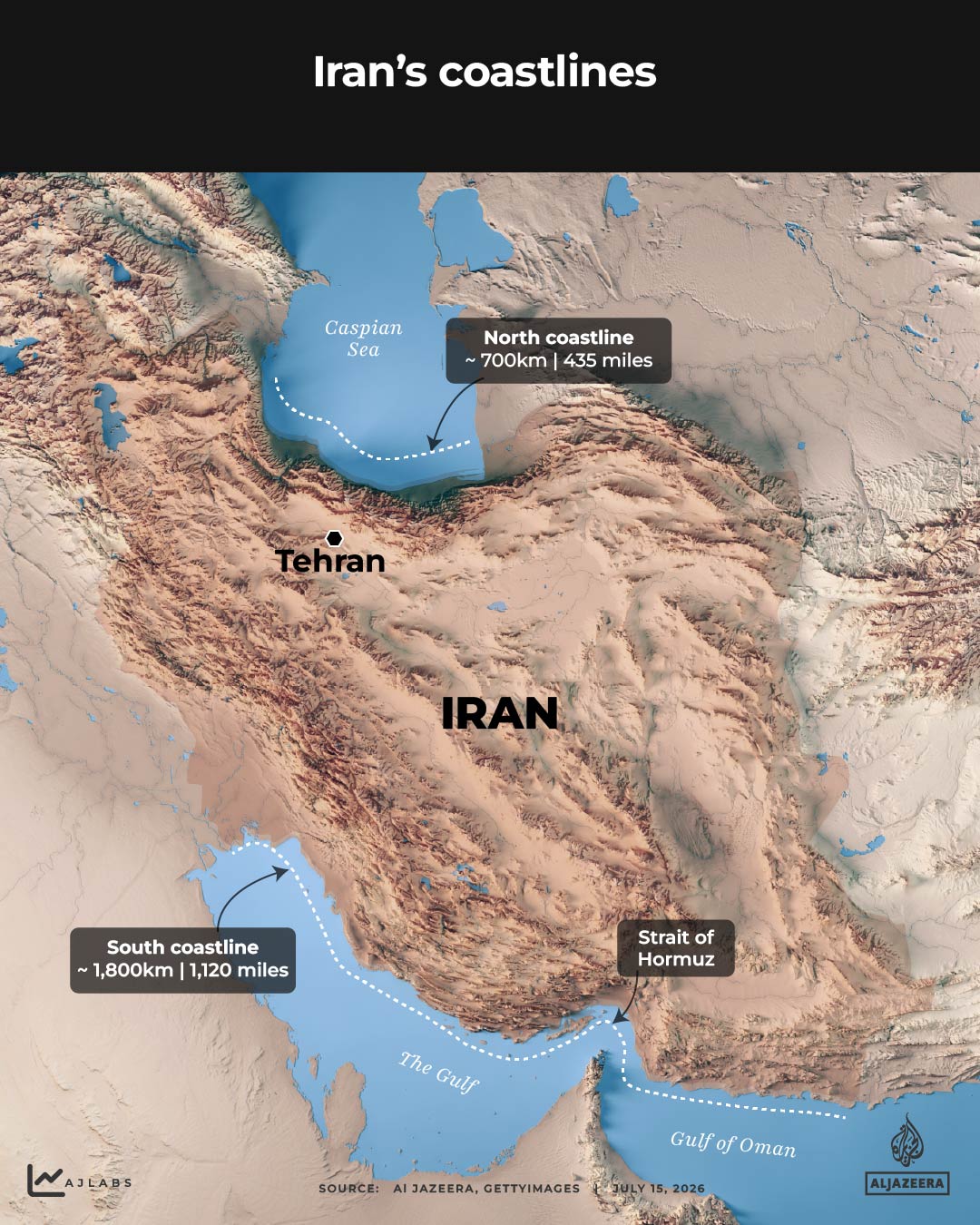
Mehdi Yazdi, a Tehran-based defence analyst, said Iran’s only deterrent is the Strait of Hormuz.
“If Iran were to abandon the Strait of Hormuz because of negotiations or anything else, it would not only lose the strait as a pressure lever, but negotiations and other issues would also slip out of Iran’s hands,” he said.
“In any case, as long as the United States attacks Iran from the countries of the region, Iran also considers attacks on US bases in these countries to be its legitimate targets.”
How many ships have passed Hormuz since the MoU?
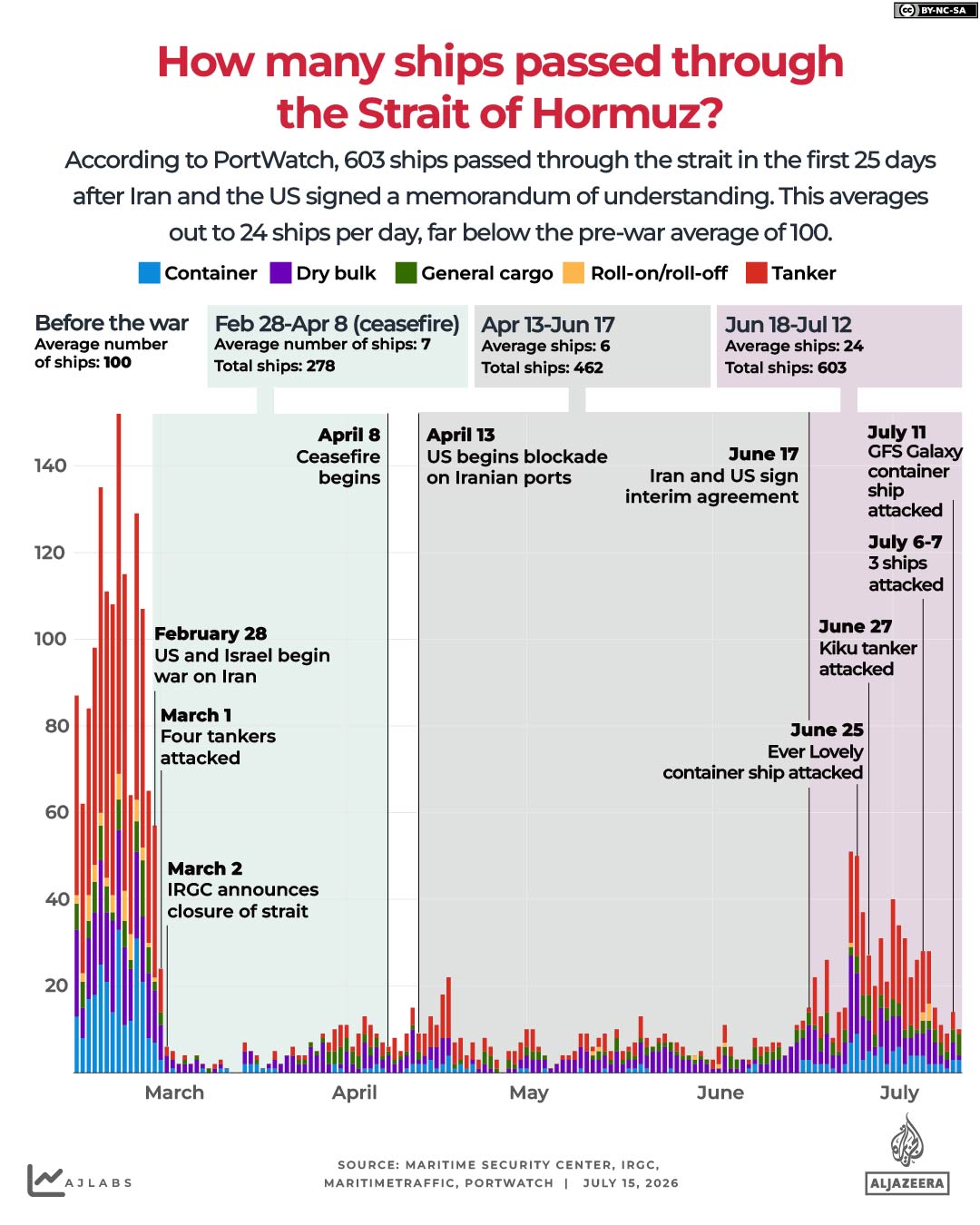
Before the war launched by the US and Israel on February 28, about 100 ships passed through the Strait of Hormuz every day, roughly half of them oil tankers, carrying a combined 20 million barrels of crude – about one-fifth of global oil consumption.
The waterway reopened after a US-Iran MoU was announced on June 17 to pave the way for more talks.
However, ship traffic remained well below normal. According to PortWatch data, only 603 ships transited the strait between June 18 and July 12, averaging 24 ships a day, far below the pre-war average.
Attacks on several ships last month also reduced the number of vessels. Now, with the US blockade of Iranian ports, the strait could once again come to a standstill.
Houthis announce maritime blockade of Saudi Arabia
Yemen’s Iran-backed Houthi rebels have announced a maritime embargo of Saudi Arabia after the two sides traded fire last week for the first time in years.
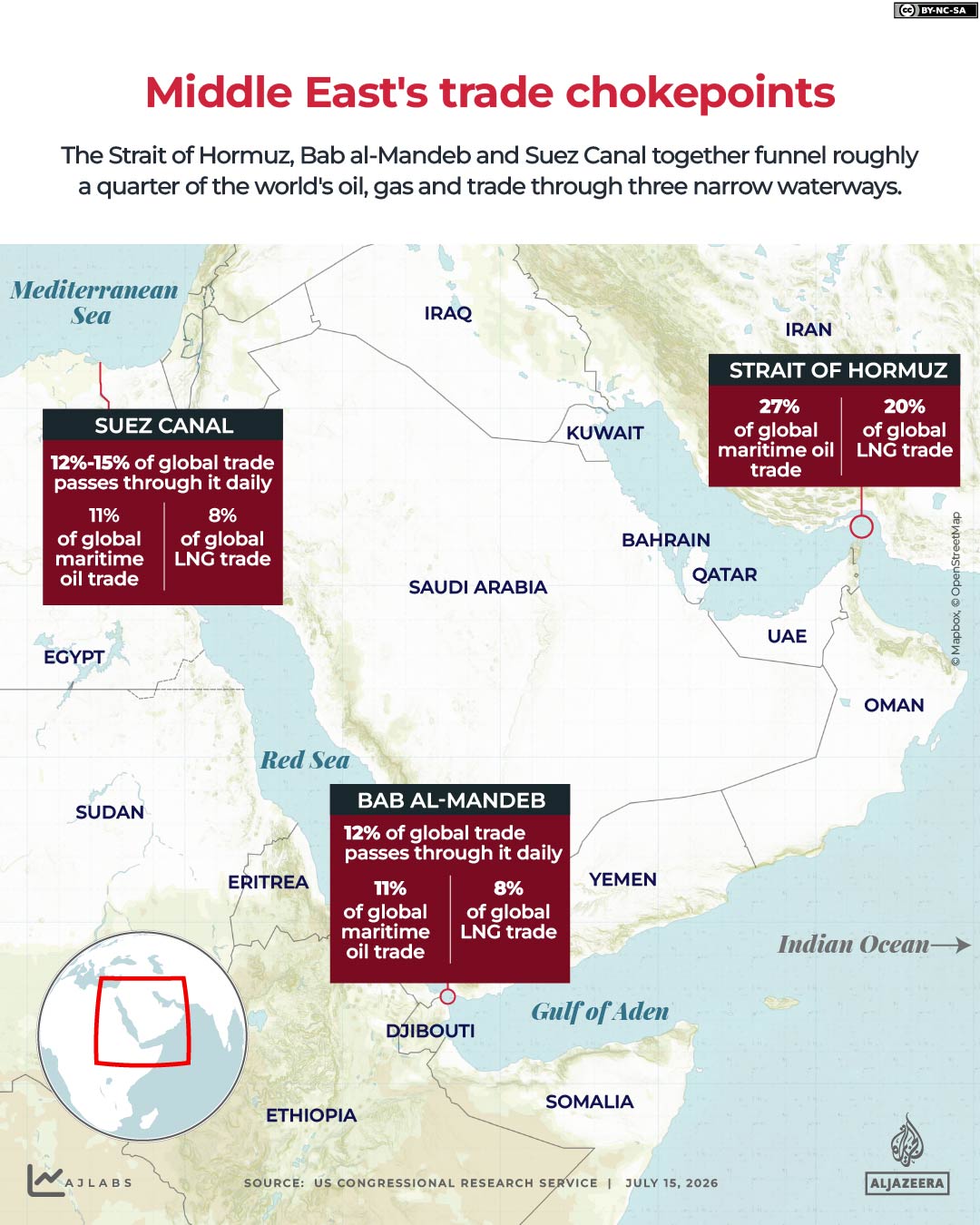
Bab al-Mandeb is one of the world’s most strategic maritime chokepoints, linking the Red Sea and the Suez Canal with the Indian Ocean.
Tehran and the Houthis have hinted at the closure of the waterway in case of a serious escalation, turning it into a second pressure point alongside the Strait of Hormuz.
If the chokepoint is shut along with Hormuz, a quarter of the world’s energy and a large portion of Asia’s exports to Europe would be blocked.
Strait of Hormuz:
- 27 percent of the global maritime oil trade
- 20 percent of global LNG trade
Bab al-Mandeb:
- 11 percent of global maritime trade
- 8 percent of global LNG trade
Suez Canal:
- 11 percent of the global maritime trade
- 8 percent of global LNG trade
Zeidon Alkinani, founding director of the Arab Perspectives Institute, told Al Jazeera there is a “very clear” message in the Houthi announcement.
There was “no mention of Iran”, suggesting the Houthis are acting to exploit what they see as a window of opportunity while both Saudi Arabia and the US are preoccupied with Iran.
“They’re taking it as an opportunity to redraw the rules imposed on them before,” he said.
