Wildfires force evacuation of tens of thousands in France and Spain
About 40,000 people flee French tourism hotspot Cap-Ferret, as nearly 20,000 evacuate in Spain’s Madrid region.
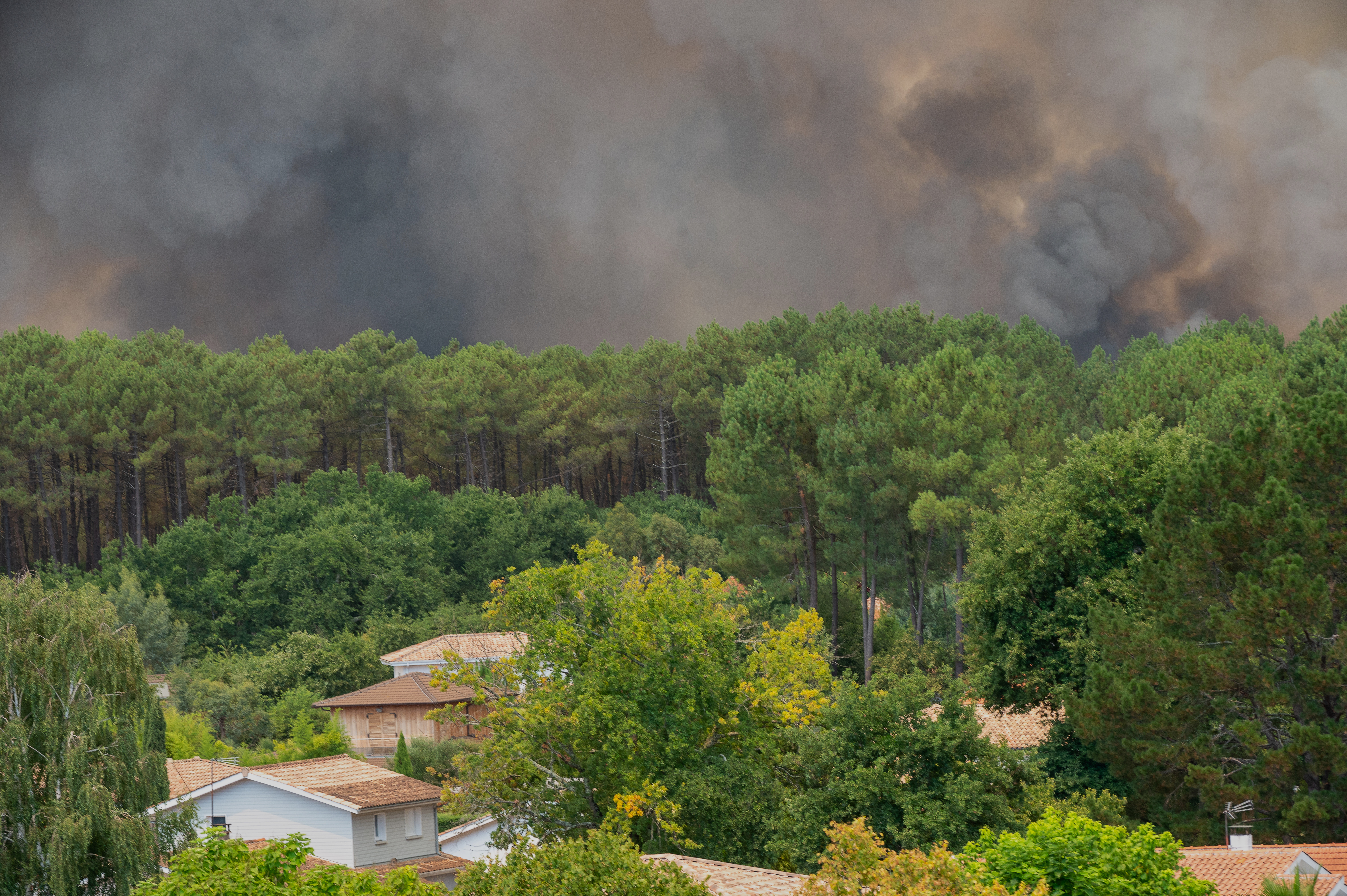
Spain’s government has declared a national emergency after wildfires forced the evacuation of nearly 20,000 people from villages near Madrid, while in southern France more than 60,000 residents fled their homes.
“We are experiencing a dramatic situation, not just in several Spanish regions but also in neighbouring countries,” Spanish Prime Minister Pedro Sanchez wrote on X on Friday.
Recommended Stories
list of 3 items- list 1 of 3Spain and France battle raging wildfires, face high risk of more
- list 2 of 3Photos: Wildfires ravage historic forest near Paris
- list 3 of 3Are countries prepared to cope with extreme weather?
“My solidarity with all the people who have been affected and been forced to leave their homes.”
At least 19,000 people in the Madrid region have been evacuated or ordered to remain in their houses, the head of the regional’s government, Isabel Diaz Ayuso, said on Friday, adding that flames have so far ravaged some 6,000 hectares (about 15,000 acres).
Meanwhile, authorities in southwestern France ordered more mass evacuations along the Atlantic coast because of the large wildfires.
France’s Interior Minister Laurent Nunez said 40,000 people have been evacuated in the Gironde department, and 23,000 in the Landes.
Spain and France both asked fellow European Union members for help.
“We will soon be able to rely on reinforcements including two Croatian Canadair firefighting aircraft, two Portuguese Air Tractor aircraft, and two heavy-lift Black Hawk helicopters from the Czech Republic and Slovakia,” French President Emmanuel Macron said.
Spanish Interior Minister Fernando Grande-Marlaska said that Italy and Greece are each sending two Canadair water-dumping airplanes.
Holidaymakers flee by road and boat
French authorities ordered the total evacuation of the Cap-Ferret peninsula, a tourism hotspot, due to a large wildfire.
Some 40,000 people were evacuated from the area, many brought to safety by boat, officials said.
More than 20,000 residents and holidaymakers were forced to flee on Thursday.
The new evacuations were carried out by road, with boat shuttles provided for people who could not travel by their own means.
About 800 firefighters were battling the flames some 50 kilometres (30 miles) west of Bordeaux on Thursday, with hundreds of gendarmes and soldiers joining the operation.
Firefighting planes have been dumping water since the blaze erupted on Wednesday. Officials and residents said the fire appeared to have been started by a brush-clearing machine.
The fire began in the village of Saumos, before advancing towards Lege-Cap-Ferret.
Known for its sand dunes, cycle paths and oyster shacks, Lege-Cap-Ferret is popular with French celebrities.
The blaze advanced quickly through a dense pine forest, ripping through 3,400 hectares (8,500 acres), an area about five times the size of Gibraltar, firefighters said.
Three houses were scorched by the flames and a caravan destroyed, but no casualties have been reported so far.
France has been battered by three heatwaves since May as part of increasingly common extreme weather episodes linked to climate change, causing thousands of deaths, drying up rivers and fuelling wildfires.
“The weather is not on our side,” Lege-Cap-Ferret Mayor Philippe de Gonneville said. “We have temperatures above 30 degrees Celsius [86 degrees Fahrenheit], with winds that have shifted to the east and northeast and are fairly strong.”
Two firefighters died this week while battling a blaze near Bordeaux airport. Firefighter unions have denounced a lack of resources and said crews were exhausted.
Earlier this month, roaring flames devastated about 10 percent of the UNESCO-listed Fontainebleau forest outside Paris, in a rare fire so far north.
Fires in 2022 damaged 30,000 hectares (74,000 acres) of forests in France, forcing some 50,000 people to evacuate.
Across Europe, three heatwaves in succession this season have intensified drought, strained water supplies and left vegetation tinder-dry, helping wildfires scorch more land already this year than the annual average of the past two decades on the world’s fastest-warming continent. The heat has also been blamed for thousands of deaths.
