UN to allow Palestinian President Abbas speech after US travel ban
Palestinian President Mahmoud Abbas is among those barred for the second year in a row.
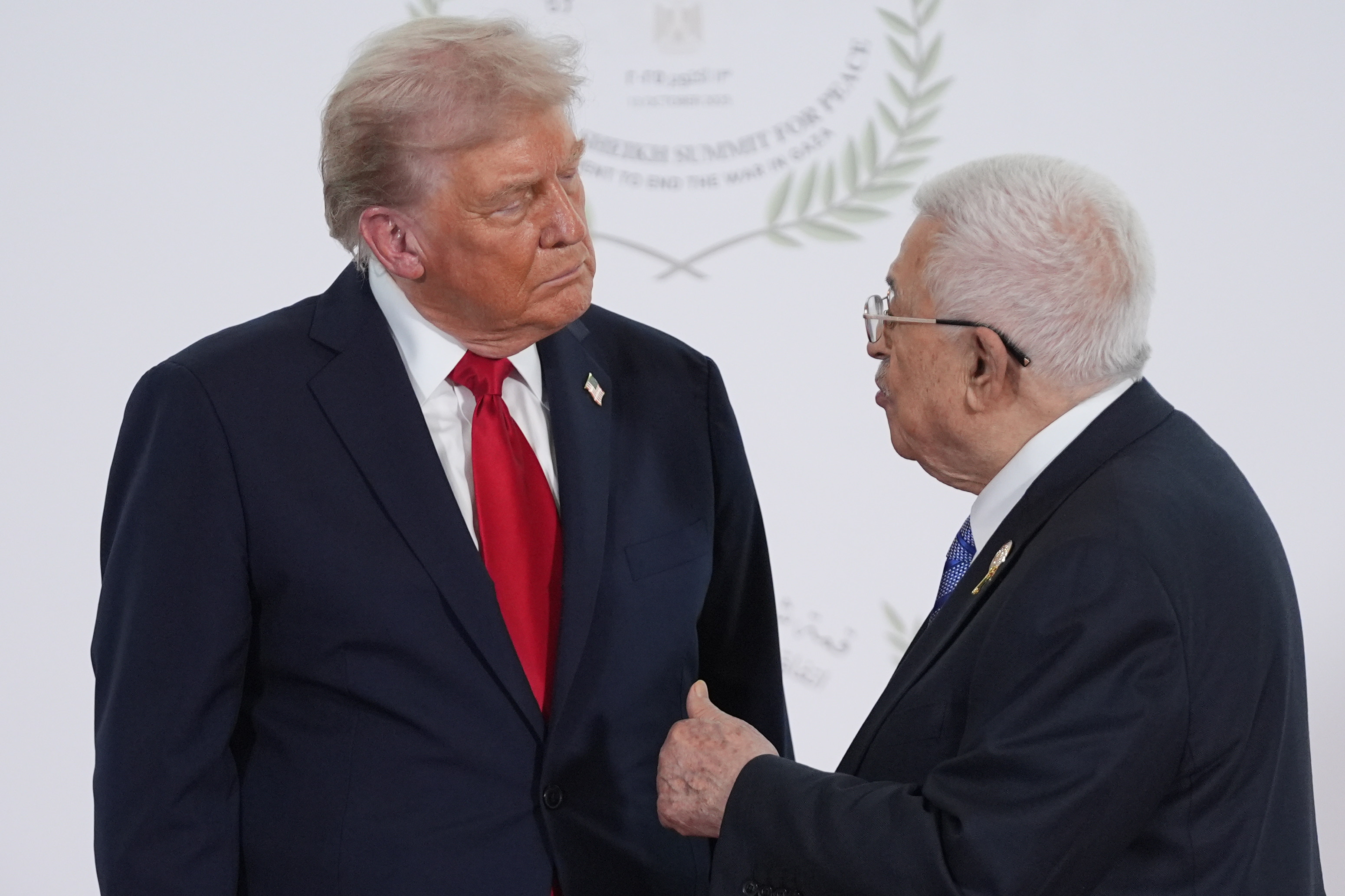
The United Nations General Assembly voted to allow Palestinian President Mahmoud Abbas to address the body via a prerecorded statement, after the United States had announced it would extend visa sanctions on Palestinian Authority (PA) officials.
Palestine’s Ministry of Foreign Affairs and Expatriates welcomed the resolution passed on Thursday, saying it “represents a breaking of the attempt to prevent Palestine’s participation” in the assembly’s annual session.
Recommended Stories
list of 3 items- list 1 of 3US set to approve 60,000 heavy bombs for Israel: What that means
- list 2 of 3Egypt’s el-Sisi rejects displacement of Palestinians from Gaza
- list 3 of 3For checkpoint and settler attack news, Palestinians tune into the radio
The ministry said Abbas’s address “will be delivered at its scheduled time and date via televised broadcast”.
It added that the vote “underscores the presence of the Palestinian voice” and the failure of attempts “to sideline Palestine and its cause” and its commitment to pursuing Palestinian statehood through political, legal and diplomatic means.
The US Department of State announced on Wednesday it will extend visa sanctions on officials of the PA and members of the Palestine Liberation Organization (PLO), preventing Abbas from travelling to New York ahead of his address to the UN General Assembly next week for the second year in a row.
“As a consequence of their failure to reform, contrary to their commitments to the United States, and their ongoing activities that undermine the prospects for peace, the United States will extend sanctions that deny visas to PLO members and PA officials,” the State Department said in a statement.
The State Department accused the PA of violating US law by pursuing international recognition of Palestinian statehood outside direct negotiations, taking its dispute with Israel to international courts and providing payments to people the US and Israel label as convicted attackers and their families.
It added that the PA mission to the UN would keep a waiver under the UN Headquarters Agreement, which allows its regular staff to continue working even as individual officials are barred from entering the US.
Abbas’s speech this year is expected to press for international recognition of Palestinian statehood and renewed momentum behind a two-state solution, following a wave of recognitions last year by the United Kingdom, France, Canada and other Western governments, as well as to draw attention to the humanitarian catastrophe in Gaza and the rapid expansion of illegal Israeli settlements and settler pogroms across the occupied West Bank.
No Israeli officials face equivalent US travel restrictions, despite an International Criminal Court arrest warrant issued against Israeli Prime Minister Benjamin Netanyahu over alleged war crimes in Gaza.
Amnesty International condemned the decision.
“The decision by the US State Department to deny visas to a high-level delegation of the State of Palestine to attend the 81st session of the UN General Assembly must be reversed,” said Erika Guevara Rosas, the organisation’s senior director for research, policy, advocacy and campaigns.
She said the move constitutes “a clear violation of the UN Headquarters Agreement”, accusing Washington of using “its privilege as the host country of the UN to impose arbitrary restrictions” on attending UN meetings.
Last year’s ban drew criticism from Palestinian officials and UN human rights experts, who said the visa bans breach the US’s obligation to allow individuals invited by the UN to travel to its New York headquarters, and have argued that singling out Palestinian representatives while shielding Israeli leaders undermines Washington’s stated commitment to a negotiated peace.
